What Is the Best Heart Rate Zone for Weight Loss After 40?
The most effective heart rate zone for weight loss after 40 is moderate intensity, typically 60 to 75 percent of your maximum heart rate, combined with strength and recovery training. Research shows that fat loss is not driven by a single “fat-burning zone,” but by total energy balance, metabolic health, and consistency across multiple types of movement.
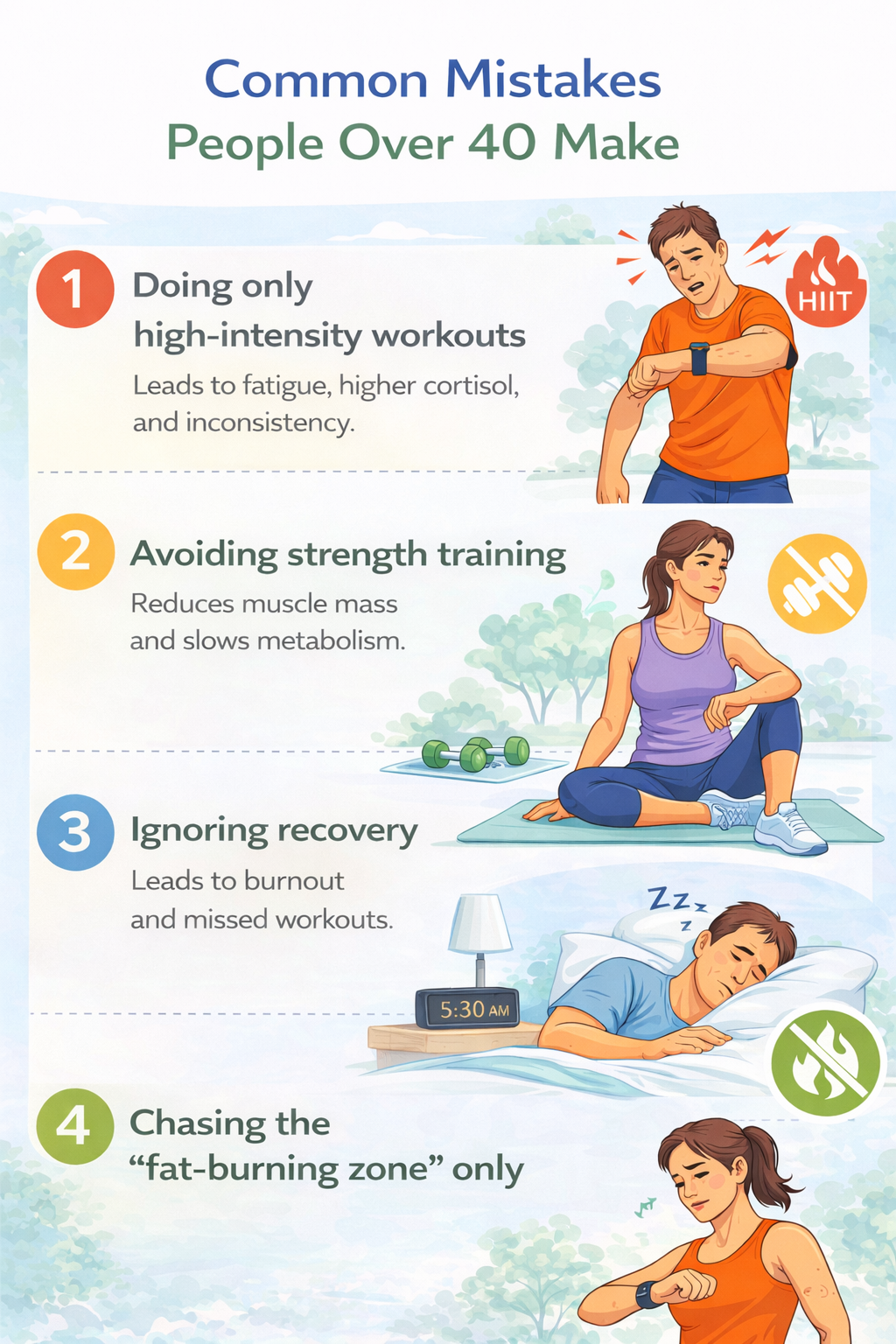
For adults over 40, combining moderate cardio with strength and mobility leads to better fat loss results than focusing on high-intensity workouts alone.
What Are Heart Rate Zones?
Heart rate zones are ranges that reflect how hard your body is working during exercise. They are usually calculated as a percentage of your maximum heart rate.
A simple estimate:
- Maximum heart rate ≈ 220 minus your age
Common heart rate zones
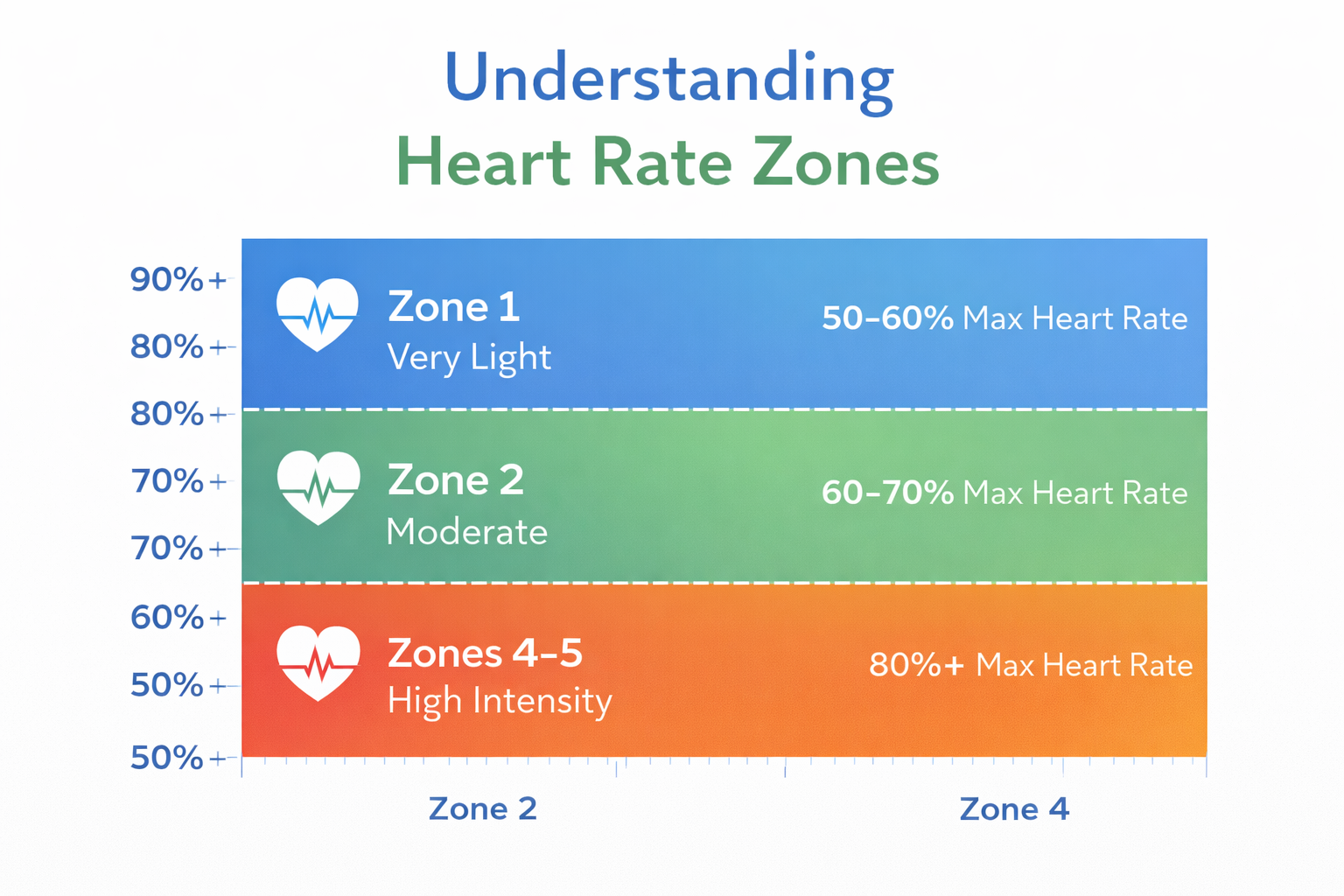
- Zone 1 (50 to 60 percent): Very light activity
- Zone 2 (60 to 70 percent): Moderate, steady movement
- Zone 3 (70 to 80 percent): Challenging but sustainable
- Zone 4 to 5 (80 percent and above): High intensity
Each zone affects your body differently.
Is There Really a “Fat-Burning Zone”?
Yes, but it is often misunderstood.
At lower intensities such as Zone 2, your body uses a higher percentage of fat as fuel. However, higher-intensity workouts burn more total calories overall.
According to research from the American Council on Exercise and multiple metabolic studies:
- Low to moderate intensity uses more fat as a percentage of energy
- Higher intensity burns more total calories but relies more on carbohydrates
The most important factor for weight loss is total energy expenditure over time, not just which fuel source is used during a single workout.
Why Moderate Heart Rate Zones Work Best After 40
For adults over 40, moderate-intensity training provides a balance between effectiveness and sustainability.
1. Lower Stress Hormone Response
High-intensity training can increase cortisol levels. Chronically elevated cortisol is linked to fat retention, especially around the abdomen.
Moderate training supports fat metabolism without excessive stress.
2. Better Recovery and Consistency
Recovery slows with age. Moderate intensity allows:
- More frequent workouts
- Lower injury risk
- Sustainable weekly routines
Consistency is the strongest predictor of long-term fat loss.
3. Improved Metabolic Health
Zone 2 and Zone 3 training improve:
- Insulin sensitivity
- Mitochondrial function
- Fat oxidation capacity
These changes make your body more efficient at using fat as fuel over time.

Why Cardio Alone Is Not Enough for Weight Loss
Many people rely only on cardio for fat loss, but this approach has limitations.
Research from the Journal of Applied Physiology shows that combining strength training with cardio leads to better fat loss and body composition than cardio alone.
Strength training helps by:
- Preserving or increasing muscle mass
- Increasing resting metabolic rate
- Improving glucose metabolism
Without strength training, weight loss often includes muscle loss, which slows metabolism.
The Missing Piece: Mobility and Recovery
Recovery and mobility are often overlooked in weight loss plans.
However, poor recovery leads to:
- Fatigue
- Reduced workout performance
- Increased injury risk
- Inconsistent routines
Mobility work improves movement efficiency and supports long-term adherence.

Why a 3-Part System Works Better Than One Heart Rate Zone
Focusing on a single heart rate zone oversimplifies how the body loses weight.
A more effective approach includes:
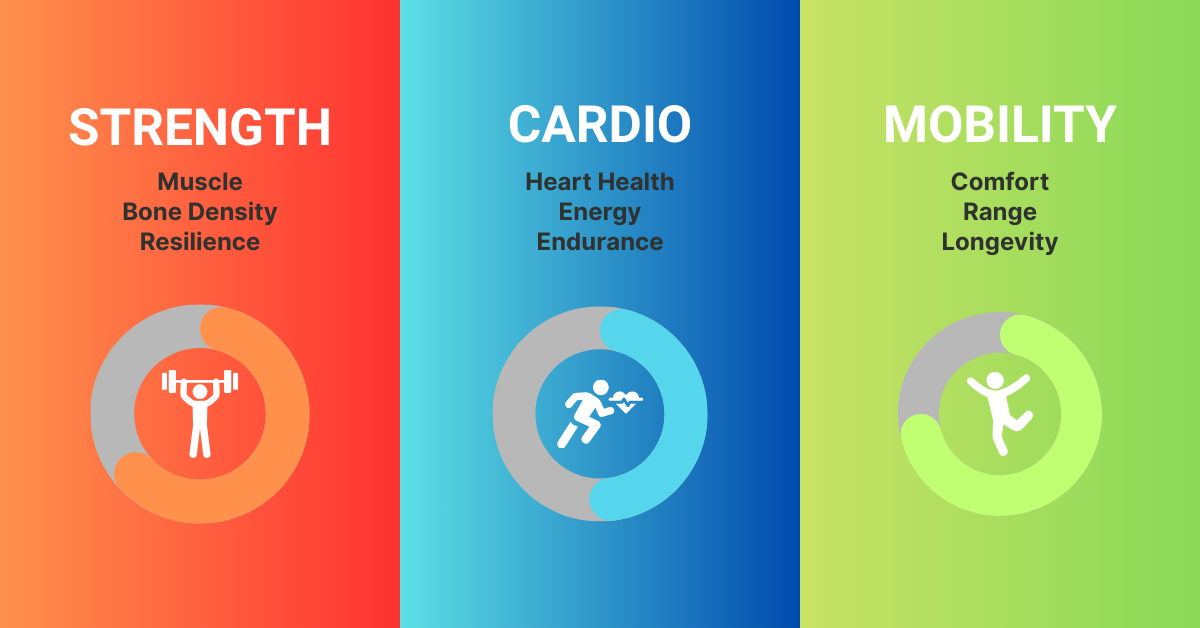
- Cardio for calorie burn and heart health
- Strength for metabolism and muscle preservation
- Mobility for recovery and consistency
This combination aligns with recommendations from the World Health Organization and the American College of Sports Medicine.
How Step.co’s 3 Targets Support Weight Loss After 40
Step.co is built around three core movement targets:
- Strength
- Cardio
- Mobility
Instead of focusing on one type of workout or a single heart rate zone, Step helps you distribute effort across all three areas each week.
Why this works for weight loss
- Cardio Target: Supports calorie burn and cardiovascular health
- Strength Target: Preserves muscle and boosts metabolism
- Mobility Target: Improves recovery and reduces burnout
This structure reflects how the body actually adapts, especially after 40.
A Simple Weekly Approach for Fat Loss After 40
A balanced weekly plan might include:
- 2 to 3 moderate cardio sessions (Zone 2 to 3)
- 2 strength sessions
- 2 to 3 mobility or recovery sessions
Sessions do not need to be long. Even short, consistent workouts improve outcomes when combined.
Frequently Asked Questions
What is the best heart rate for fat loss?
Moderate intensity, around 60 to 75 percent of max heart rate, is effective and sustainable for most people.
Is Zone 2 enough to lose weight?
Yes, when done consistently and combined with strength training and proper nutrition.
Do you need high-intensity workouts to lose weight?
No. Many people over 40 achieve better results with moderate intensity and consistent routines.
How many days per week should I train?
Most guidelines recommend at least 150 minutes of moderate activity per week plus strength training.
Final Takeaway
There is no single heart rate zone that guarantees weight loss.
For adults over 40, the most effective approach is:
- Moderate cardio for sustainable calorie burn
- Strength training to support metabolism
- Mobility and recovery to maintain consistency
Weight loss is not about pushing harder. It is about training in a way your body can repeat week after week.
Check out Step's daily recommendation only based on your real condition. Adaptive movement coach knows what your body needs next!